Market Pulse
The Bank of Canada has cut its benchmark interest rate by 0.25% for the second consecutive meeting, bringing it to 4.5%, and signaled further easing due to waning inflation concerns. Governor Tiff Macklem emphasized that economic headwinds and excess supply are shifting the focus towards preventing inflation from falling below the 2% target. With the consumer price index dropping to 2.7% annually in June, the bank is confident in managing price pressures and aims for a soft economic landing. The dovish stance has led to a bond rally and a drop in the Canadian dollar, while economic growth projections have been revised down to 1.2% for 2024.
Toronto condo rents fell in the second quarter for the first time since 2021, with a 1.2% annual decline driven by a surge in listings. This drop in rent provides some relief to renters amidst Canada's broader trend of record-high rents due to increased immigration. The influx of condo completions boosted rental listings by 47% year-over-year, easing costs. While condo rents are easing, rents for newer purpose-built rental apartments still show modest growth amid rising vacancies.
The euro-area economy grew by 0.3% in the second quarter, exceeding forecasts, as robust performances in France and Spain offset Germany's 0.1% contraction. This growth highlights the challenges facing the European Central Bank (ECB) as it prepares for a possible interest rate cut in September amidst uneven regional growth and inflation dynamics. Spain's inflation dropped to 2.9% in July due to lower energy and food prices, while Germany's economic struggles continue. Despite muted growth projections for 2024, strong domestic demand and net trade have supported economic expansion in key countries, with Ireland showing the strongest GDP growth at 1.2%.
The tech-led stock rally that boosted markets for the past year and a half faltered last month, with the Nasdaq 100 experiencing its worst day since October 2022, ending a 17-month streak without such a decline. Recent tech losses might signal a rotation into assets better suited for a slower growth economy.
Cruise vacations are gaining popularity among younger travelers, with Millennials and Gen Z now constituting half of Royal Caribbean Cruise Ltd.'s passengers. This demographic shift has decreased the average age of cruise passengers for two consecutive years. Royal Caribbean has benefited the most from this trend, recovering quickly post-pandemic with new large ships and enhanced amenities. The appeal of cruises lies in their cost-effectiveness and all-inclusive nature, making them attractive to budget-conscious young travelers. Virgin Voyages, targeting Millennials with its adult-only cruises and inclusive pricing, has seen a 45% increase in sales and expects profitability within 18 months. This growing interest from younger travelers is crucial for the cruise industry, still recovering from the pandemic.
Walt Disney Co.’s "Deadpool & Wolverine" achieved a record-breaking $211.4 million in ticket sales in the US and Canada during its opening weekend, marking the highest domestic debut of the year and setting a new record for R-rated films, surpassing the previous record held by Warner Bros. Discovery Inc.’s "Joker."
All data sourced from FACTSET and SIACharts.
All data is for the reported month and in local currentestcy.
The Ups & Downs
- Granite Real Estate Investment Trust (GRT.UN) rose 10.92% in July, attracting scores of investors in this new falling interest rate environment.
- CGI Inc. (GIB.A) climbed 9.56% after releasing a strong Q3 result. The company has initiated a dividend and announced two strategic acquisitions due to improved margins and strong cash generation.
- Shares of Alphabet Inc. (GOOG) dropped 9.00% in this past month, despite a positive earnings report. The drop was fueled by a perceived over-investment by the company into Artificial Intelligence.
- Waste Management (WM) faltered on its earnings release in July, declining 7.39%. The company posted Q2 earnings and revenue below analyst estimates for the quarter.
All data sourced from FACTSET and SIACharts. All data is for the reported month and in local currency.
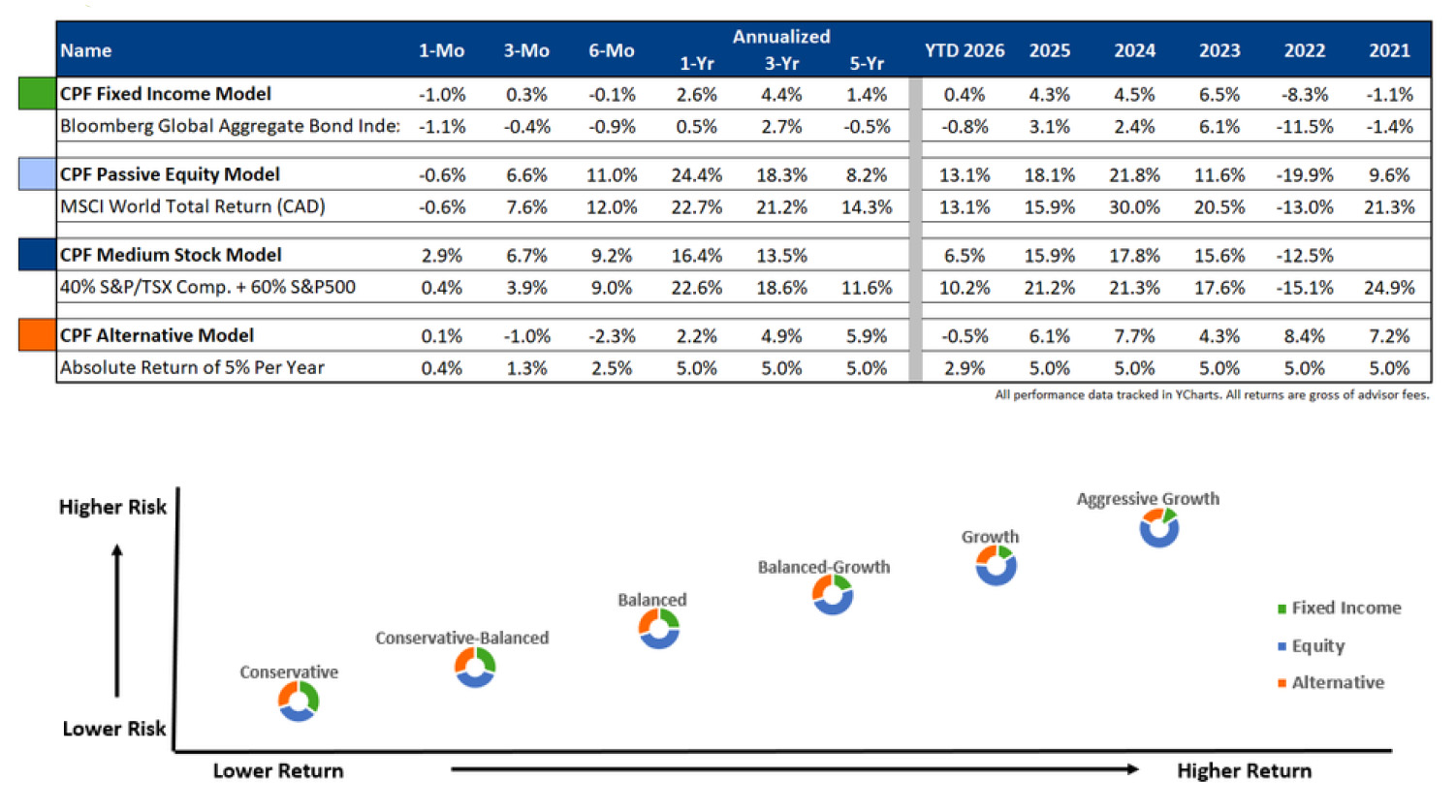
Portfolio Returns
As of July 31st, 2024

Portfolio Highlights
Microsoft (MSFT.TO) surged 24.20% after a blowout fiscal Q4. Revenue of $90.0 billion (up ~18%) and non-GAAP EPS of $4.74 both cleared estimates, driven by the Intelligent Cloud segment as Azure grew 43% and crossed $100 billion in annual revenue for the first time. The result reasserted Microsoft's cloud leadership and eased fears that AI infrastructure costs would erode margins—though it's worth noting the beat was aided by a $3.2 billion gain on its Anthropic stake.
Canadian Natural Resources (CNQ.TO) advanced 19.00%, buoyed by firmer crude prices amid Middle East supply risks and improving sentiment across Canadian energy. The stock drew multiple analyst upgrades, including Zacks lifting it to Strong Buy, while constructive pipeline developments—British Columbia softening its opposition to new pipelines and an Alberta-Ontario proposal for a transcontinental line—added tailwinds. The move reinforced CNQ's standing as a low-cost, capital-disciplined free-cash-flow generator.
TELUS (T.TO) declined 10.80% after a weak Q2 that paired an earnings and revenue miss with a sweeping strategic reset. A C$2.1 billion non-cash impairment at TELUS Digital drove a C$1.8 billion net loss, and the company cut its dividend by 55% while lowering full-year revenue and EBITDA guidance, redirecting capital toward deleveraging. The reset triggered downgrades from Morgan Stanley, CIBC, and Barclays, underscoring the structural and competitive pressures—including Starlink—facing Canadian telecom.
CRH (CRH) fell 8.31% despite a Q2 earnings beat. EPS of $2.21 topped the $2.02 consensus, but full-year 2026 EPS guidance of $5.60–$6.05 landed with a midpoint below the ~$5.95 consensus, and subdued residential construction activity amid high mortgage rates remained a headwind. The pullback reflects investor caution on near-term demand even as infrastructure spending and pricing stay supportive.
All data sourced from FACTSET and Bloomberg L.P.
All data is for the reported month and in local currency.
Macro Watch
In July 2026, the International Monetary Fund released its updated World Economic Outlook, projecting global growth to hold at 3.0% for the year while confirming that global disinflation has essentially stalled. The macroeconomic landscape is becoming increasingly fractured, creating a sharp divide between nations integrated into the booming technology supply chain and those vulnerable to commodity shocks. Policymakers are now navigating an environment where AI-driven demand lifts certain economies, even as prolonged geopolitical conflicts weigh heavily on energy importers.
Energy supply chains remained a volatile focal point throughout the month, significantly altering global inflation trajectories. While a mid-June memorandum of understanding between the U.S. and Iran briefly allowed for the reopening of the Strait of Hormuz, renewed hostilities in July disrupted the gradual recovery of global oil markets. This instability generated a severe supply shock for oil, gas, and fertilizers, ultimately forcing upward revisions in core inflation forecasts and keeping financial markets on high alert.
Despite elevated borrowing costs and global commodity disruptions, the U.S. economy continues to display remarkable resilience compared to its European counterparts. Domestic growth remains steady, heavily supported by massive capital expenditures in artificial intelligence that provide a strong structural floor for business activity. Furthermore, because the U.S. operates as a net energy exporter, its robust consumer sentiment has been largely shielded from the energy price spikes currently suppressing growth in the U.K. and the Eurozone.
All data sourced from FACTSET and SIACharts.
All data is for the reported month and in local currency.
Portfolio Returns
July 2026