Market Pulse
The Canadian economy grew at an annualized rate of 1.7% in the first quarter, below the anticipated 2.2%, due to weaker inventory growth despite robust consumption. The Bank of Canada cut its key policy rate to 4.75% in June, with many economists advocating for further cuts. Business investment showed mixed results, with growth in engineering and oil and gas but slowdowns in inventory investment.
Investors are optimistic about a rally in US Treasuries as inflation and the labor market cool, with potential Federal Reserve rate cuts by September. However, a key bond market indicator suggests caution, with a higher "neutral rate" - the theoretical level of interest rates that neither stimulates nor slows the economy - projected around 3.6%, potentially limiting bond gains.
Global investors are likely to continue investing in record-high stock markets. A Bank of America survey among 206 participants managing US$640 billion revealed a strong preference for US stocks. Investor bullishness is at its highest since November 2021, and cash levels in money-market funds are at a three-year low, currently totaling around US$6.1 trillion. The enthusiasm is particularly pronounced in technology stocks, with significant investments in tech companies like Microsoft and Nvidia.
The Canadian government is considering tariffs on Chinese-made electric vehicles (EVs), following actions by the US and European Union, to counteract China’s overproduction strategy. With the value of Chinese EVs imported by Canada surging to $2.2 billion last year, there are concerns about market flooding and domestic job threats. Some advocate for tariffs to protect local manufacturing, while others argue for keeping EV costs low to boost consumer adoption.
The copper market has been turbulent due to conflicting signals from Chinese traders and Western hedge funds. Despite China accounting for over half of global copper demand, Chinese traders struggled with the recent price surge driven by bullish Western investors. Attention has shifted back to China's weak physical market, with concerns about the long-term strength of Chinese copper consumption, particularly due to the sluggish property sector and shifts towards aluminum as a substitute.
New data centers in Silicon Valley are set to significantly increase electricity demand, adding 3.5 gigawatts. The San Francisco Bay Area, home to tech giants like Meta, Alphabet, and Apple, will host over two dozen new projects. This surge is driven by growing AI needs, increasing power consumption after decades of stagnation.
All data sourced from FACTSET and SIACharts.
All data is for the reported month and in local currentestcy.
The Ups & Downs
- Shares of Apple Inc. (AAPL) continued their climb, adding another 14.57% in June. The company held its annual Worldwide Developers Conference where it showcased 'Apple Intelligence', their newest stride in the AI race.
- Microsoft (MSFT) followed suit, gaining another 10.64% in the month. Optimism surrounding the rapid advancement of AI and the efficiency gains it could generate have pushed the stock to an all-time high.
- Nutrien Ltd. (NTR) shares dropped 13.52% in June after announcing they will halt work on their clean Ammonia project. Management cited rising costs and the need to prioritize its core agricultural segments.
- Nucor Corp. (NUE) was down 7.02% this past month. Concerns surrounding global steel production overcapacity continue to be an ongoing risk for the company. China continues to be a significant contributor to excess steel.
All data sourced from FACTSET and SIACharts. All data is for the reported month and in local currency.
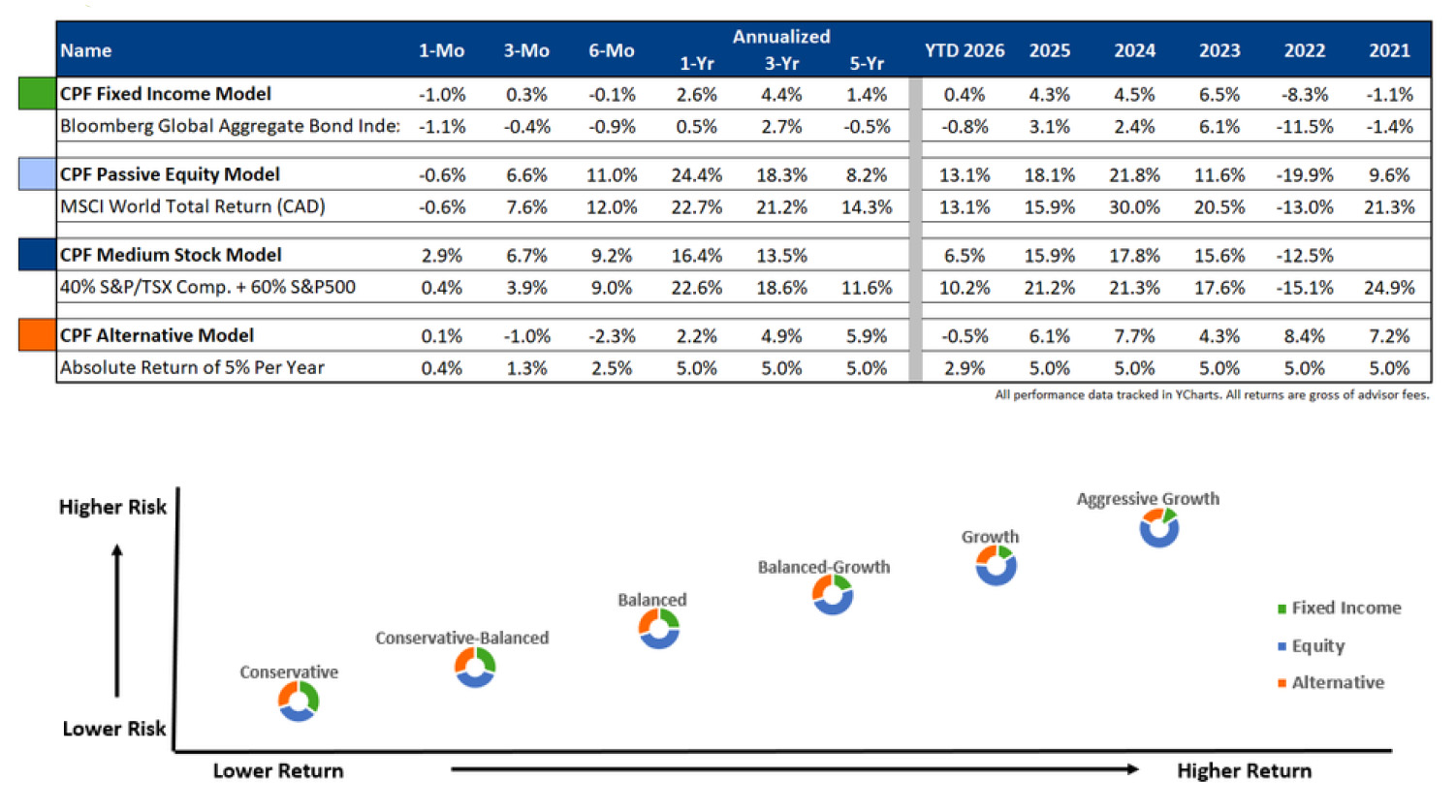
Portfolio Returns
As of June 30th, 2024

Portfolio Highlights
Microsoft (MSFT.TO) surged 24.20% after a blowout fiscal Q4. Revenue of $90.0 billion (up ~18%) and non-GAAP EPS of $4.74 both cleared estimates, driven by the Intelligent Cloud segment as Azure grew 43% and crossed $100 billion in annual revenue for the first time. The result reasserted Microsoft's cloud leadership and eased fears that AI infrastructure costs would erode margins—though it's worth noting the beat was aided by a $3.2 billion gain on its Anthropic stake.
Canadian Natural Resources (CNQ.TO) advanced 19.00%, buoyed by firmer crude prices amid Middle East supply risks and improving sentiment across Canadian energy. The stock drew multiple analyst upgrades, including Zacks lifting it to Strong Buy, while constructive pipeline developments—British Columbia softening its opposition to new pipelines and an Alberta-Ontario proposal for a transcontinental line—added tailwinds. The move reinforced CNQ's standing as a low-cost, capital-disciplined free-cash-flow generator.
TELUS (T.TO) declined 10.80% after a weak Q2 that paired an earnings and revenue miss with a sweeping strategic reset. A C$2.1 billion non-cash impairment at TELUS Digital drove a C$1.8 billion net loss, and the company cut its dividend by 55% while lowering full-year revenue and EBITDA guidance, redirecting capital toward deleveraging. The reset triggered downgrades from Morgan Stanley, CIBC, and Barclays, underscoring the structural and competitive pressures—including Starlink—facing Canadian telecom.
CRH (CRH) fell 8.31% despite a Q2 earnings beat. EPS of $2.21 topped the $2.02 consensus, but full-year 2026 EPS guidance of $5.60–$6.05 landed with a midpoint below the ~$5.95 consensus, and subdued residential construction activity amid high mortgage rates remained a headwind. The pullback reflects investor caution on near-term demand even as infrastructure spending and pricing stay supportive.
All data sourced from FACTSET and Bloomberg L.P.
All data is for the reported month and in local currency.
Macro Watch
In July 2026, the International Monetary Fund released its updated World Economic Outlook, projecting global growth to hold at 3.0% for the year while confirming that global disinflation has essentially stalled. The macroeconomic landscape is becoming increasingly fractured, creating a sharp divide between nations integrated into the booming technology supply chain and those vulnerable to commodity shocks. Policymakers are now navigating an environment where AI-driven demand lifts certain economies, even as prolonged geopolitical conflicts weigh heavily on energy importers.
Energy supply chains remained a volatile focal point throughout the month, significantly altering global inflation trajectories. While a mid-June memorandum of understanding between the U.S. and Iran briefly allowed for the reopening of the Strait of Hormuz, renewed hostilities in July disrupted the gradual recovery of global oil markets. This instability generated a severe supply shock for oil, gas, and fertilizers, ultimately forcing upward revisions in core inflation forecasts and keeping financial markets on high alert.
Despite elevated borrowing costs and global commodity disruptions, the U.S. economy continues to display remarkable resilience compared to its European counterparts. Domestic growth remains steady, heavily supported by massive capital expenditures in artificial intelligence that provide a strong structural floor for business activity. Furthermore, because the U.S. operates as a net energy exporter, its robust consumer sentiment has been largely shielded from the energy price spikes currently suppressing growth in the U.K. and the Eurozone.
All data sourced from FACTSET and SIACharts.
All data is for the reported month and in local currency.
Portfolio Returns
July 2026